
First test system for AI-based automatic maintenance in Air Traffic Control (ATC) is heading towards operational tests.
The DLR SELF-MADE-ATC project enables air traffic control organisations to maintain and adapt an automatic speech recognition and understanding system (ASRU) with small effort using automation and artificial intelligence (AI). DLR has developed a first SELF-MADE-ATC prototype. On April 13th, DLR, Skyguide and Rohde & Schwarz agreed to improve the prototype through continuous evaluation of its processing capabilities in the Zurich Air Traffic Control Center.
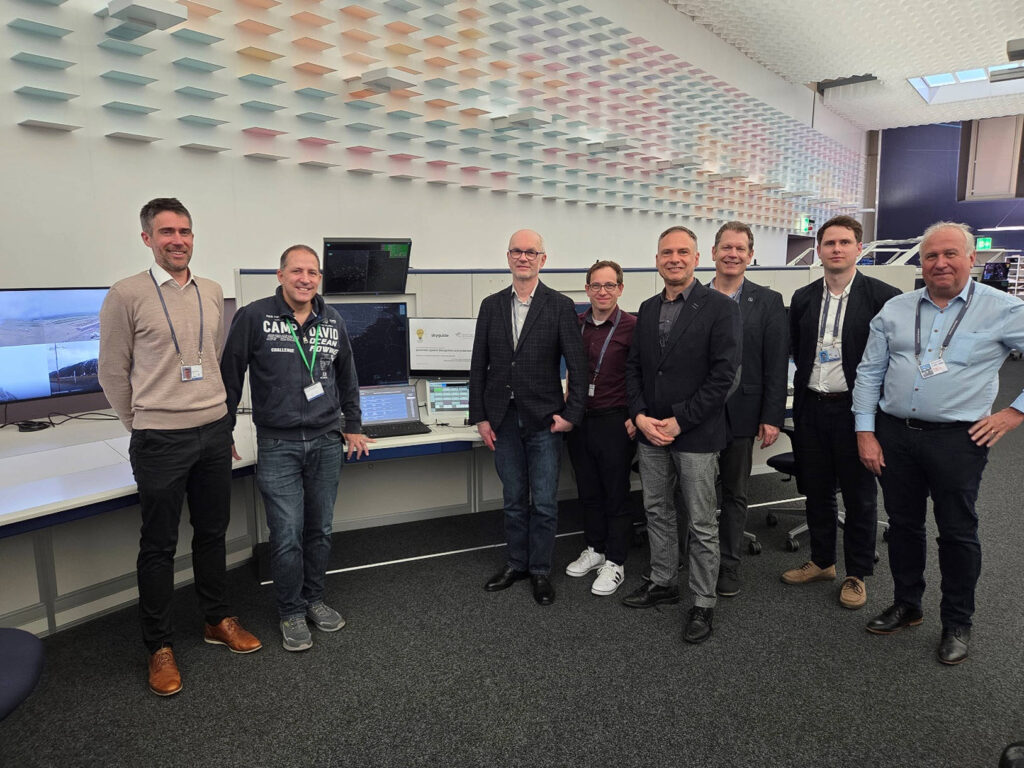
The prototype, pictured above, runs in the operations room at Dubendorf (Zurich) since 19th of February 2026. Deployed on a working position in “shadow mode”, the system is safely processing operational data. It operates continuously on the live radio stream and provides immediate transcriptions in real-time as well as an automatic understanding of the issued Air Traffic Controller clearances.
A major challenge so far not addressed in research is maintenance of ASRU software. Adding new waypoints such as “KOLUL” or new airline designators such as “Itarrow” as well as changing the modelled phraseology currently requires speech recognition experts and elaborate manual testing processes. Updating of phraseology could include adding new innovative phraseology for a vertical rate command, e.g., the recommended version is “rate of descend two thousand five hundred feet per minute”, but the following not by ICAO recommended phraseology is also observed “increase two five zero zero feet per minute ”. With the DLR SELF-MADE-ATC system, the major effort of this work will be done automatically using AI, while final manual steps such as approval of enhancements can be carried out by staff of the air traffic control organisation.
This challenge can only be tackled and evaluated running the DLR prototype in operations and running on the real industrial platforms. Skyguide, Rhode & Schwarz and DLR committed during the presentation on April 13th to continue as a powerful team on the operational tests of SELF-MADE-ATC. Technical and organisational questions such as responsibilities for installation, quality checks and licensing issues are going to be solved to receive first results on automatic ai-based maintenance of speech recognition and understanding from July 2026 onwards.